How a Fortnite Bronze to Unreal ranked speedrun works in Fortnite Reload
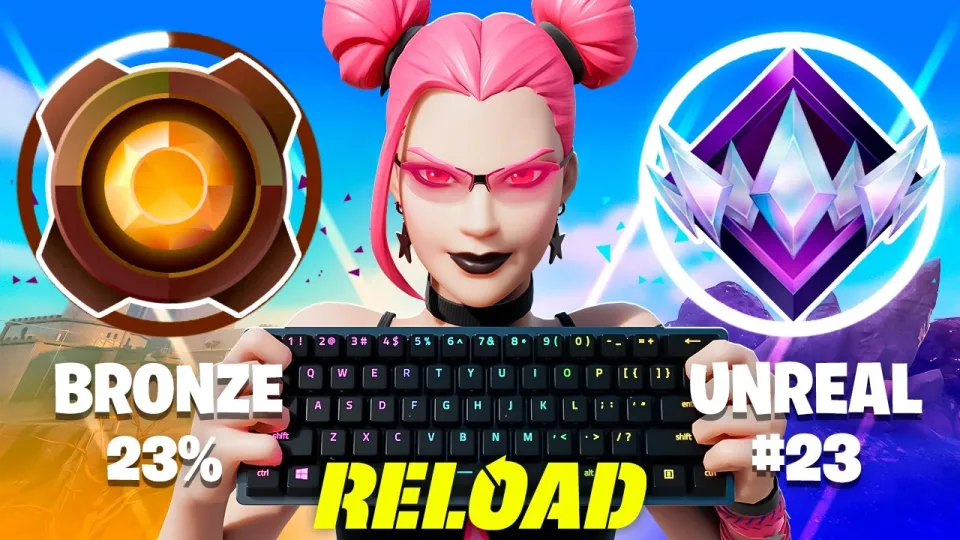
Video: BRONZE To UNREAL Ranked Speedrun In Fortnite Reload!
Want articles like this for your own video to promote it on YouTube and Google? Order them through the Telegram bot @sat_sit_bot. The bot writes and publishes the articles itself (with your YouTube video embedded) on popular topical websites (no ads). Your first 50 articles are free.
· based on the channel HaloBT
A Fortnite Bronze to Unreal ranked speedrun is a solo climb through every ranked tier in Fortnite Reload, from the lowest Bronze division to Unreal, the top of the ladder, in as few matches as possible. HaloBT attempts exactly that in the video "BRONZE To UNREAL Ranked Speedrun In Fortnite Reload!", and the run doubles as a practical map of how ranked progression actually works in Reload. Players who want the same practice tools can grab HaloBT's Fortnite creator maps and codes via the MoreHaloBT Fortnite creator page.
What the Fortnite Bronze to Unreal ranked speedrun actually involves
The challenge is a full ladder climb inside Fortnite Reload, the fast respawn-based mode, rather than standard Battle Royale. Ranked in Fortnite is split into named tiers, and each tier contains three divisions plus a final division that must be cleared before promotion. The full path from Bronze to Unreal runs through Bronze, Silver, Gold, Platinum, Diamond, Elite, Champion and finally Unreal, and Unreal itself is not a fixed ceiling: it is a percentile bracket that keeps moving as more players reach it.
A speedrun changes the incentives. In a normal ranked grind, survival and placement are enough to climb slowly. In a speedrun, every match has to convert into points efficiently, which means early eliminations, smart rotations and avoiding pointless fights that burn time without adding score. Reload helps here because respawns let a player recover from an early death instead of losing the entire match to one bad drop.
How Fortnite Reload changes the ranked climb
Fortnite Reload compresses a Battle Royale match into a shorter, denser format with respawns, so the risk profile of every fight is different. Losing an early engagement does not end the game, which makes aggressive opening plays far more reasonable than in standard ranked, where a single death can cost placement points outright. The trade-off is that Reload lobbies are crowded with players who are also pushing for points, so third parties arrive fast and fights chain together.
For a speedrun, that density is an advantage. More fights per minute means more elimination points per hour, and respawns mean a lost fight is a setback rather than a reset. The practical rule is to treat each life as disposable early and increasingly precious late, when the lobby thins out and placement points become the main source of score.
The rank-by-rank reality of the climb
Each stage of the ladder asks for a different approach, and the middle tiers are where most speedruns stall. A rough breakdown of what changes as the climb progresses:
- Bronze and Silver: point requirements are low and matches are forgiving. The goal is volume, not perfection, and a steady pace of eliminations plus top placements moves the bar quickly.
- Gold: this is the first real filter. Lobby skill rises noticeably, and players who relied on raw aim alone start losing points to smarter opponents. Consistent mid-game positioning matters more than highlight plays.
- Platinum and Diamond: mistakes get punished. Third parties are constant, and a speedrunner has to choose fights that can be finished fast rather than fights that look appealing.
- Elite and Champion: the point gaps between divisions widen, and progress becomes a grind of small gains. Placement points and elimination counts both need to be respectable in the same match.
- Unreal: reaching it is the finish line, but holding it is a separate project, since the bracket is percentile-based and the threshold rises as the season continues.
Why solo queue is the harder version of the challenge
Running the climb solo removes the biggest variable in ranked Fortnite: teammates. In fills, a strong duo or squad can carry points faster, but random teammates can also drag a run backward through early deaths and lost fights. Solo queue means every point earned is earned by the player, which makes the run a cleaner measure of individual skill and a slower one in raw time.
The cost is consistency of information. Without a teammate, there is no second set of eyes on rotations, no one to hold an angle while the player pushes, and no one to trade a lost fight. That pushes the playstyle toward self-sufficient habits: keeping an escape route, avoiding open ground without cover, and finishing fights quickly enough to reset before a third party arrives.
Practice tools and settings that support a fast climb
Mechanics are the floor of any ranked speedrun, and HaloBT's own training map is built around the pieces that matter most in Reload. The Elite Aim Edit Piece map, code 6317-4546-8691, is designed for aim, editing and piece control repetition, and it can be found in Fortnite by searching the creator name. Controller players in particular benefit from drilling edits and piece control in a controlled environment, because those inputs are the slowest to build muscle memory for on a pad.
Beyond mechanics, the settings that matter for a climb are the boring ones: a comfortable sensitivity that holds up over long sessions, stable performance, and a keybind or controller layout that makes building and editing reflexive rather than deliberate. A speedrun is a marathon of short, intense matches, and consistency beats peak performance.
Common questions from players chasing Unreal
The most frequent concern among players attempting this climb is a plateau, especially after switching input devices. Improvement in Fortnite rarely arrives in a straight line: mechanics improve quickly at first, then progress shifts to decision-making, which is harder to measure and slower to train. The fix is usually to isolate one weakness at a time, whether that is edits, aim in close range, or rotation timing, and to review matches instead of only playing more of them.
A second recurring theme is the difficulty of the Gold tier specifically, which many players describe as unexpectedly punishing. That reputation is earned: Gold is where opponents stop making free mistakes, and the point requirements start to demand both eliminations and placement in the same match.
A third is the value of creative maps versus ranked matches. The honest answer is that both are needed. Maps build the mechanics that make fights winnable; ranked matches teach the decisions that make those mechanics count. Players who only grind one or the other tend to stall.
Useful links
- MoreHaloBT Fortnite creator page — HaloBT's Fortnite maps and codes, including competitive practice builds.
- https://discord.com/invite/halobt — the HaloBT community Discord.
- https://www.twitch.tv/halobt — daily streams.
- https://twitter.com/halobombtrooper — updates and clips on X.
- https://www.instagram.com/therealhalobt — Instagram.
Final thoughts on the Fortnite Bronze to Unreal climb
The Bronze to Unreal ranked speedrun in Fortnite Reload is less about raw mechanical brilliance than about converting every match into points without wasting time. Reload's respawn system rewards aggression early and discipline late, and the solo format means the result reflects the player rather than the squad. The middle tiers, especially Gold through Diamond, are where the run is decided, because that is where opponents stop handing over free points. HaloBT's run is a useful reference for anyone planning the same climb, and the creator's practice maps are a sensible starting point for building the mechanics it requires. Start with the MoreHaloBT Fortnite creator page and drill the fundamentals before queueing for the ladder.
Key takeaways
- The run starts at Bronze and ends at Unreal, the top Fortnite ranked tier, inside Fortnite Reload rather than standard Battle Royale.
- Fortnite Reload is a faster mode with respawns, so a single bad drop costs placement points but not the whole match.
- Climbing from Bronze to Unreal crosses eight named tiers, from Bronze through Silver, Gold, Platinum, Diamond, Elite, Champion to Unreal.
- HaloBT runs the challenge solo, which removes teammate luck from the equation but slows point gain compared with squads.
- HaloBT also publishes a mechanics training map, code 6317-4546-8691, built for aim, edit and piece-control practice.
Questions & answers
How long does a Bronze to Unreal speedrun take in Fortnite Reload?
There is no fixed time, because it depends on win rate, elimination counts and how many points each match yields. The lower tiers move quickly because point requirements are small, while Elite, Champion and Unreal absorb most of the hours. A solo run is slower than a squad run but easier to measure.
Is it easier to reach Unreal in Fortnite Reload or in standard Battle Royale?
Reload is generally faster for climbing because respawns reduce the cost of a bad drop and matches are shorter and denser with fights. Standard Battle Royale punishes an early death with a full match lost, which slows point accumulation. The trade-off is that Reload lobbies are more crowded and third parties arrive sooner.
Why do so many players get stuck in Gold rank?
Gold is where opponents stop giving away free eliminations and start playing for placement, so raw aim alone stops being enough. Point requirements also begin to demand both kills and a strong finish in the same match. Players who plateau there usually need to work on rotations and fight selection rather than mechanics.
Do training maps actually help with a ranked climb?
Yes, but only alongside real matches. Maps like HaloBT's Elite Aim Edit Piece build the aim, edit and piece-control habits that make fights winnable, while ranked matches teach the decisions that turn those mechanics into points. Grinding only one of the two tends to produce a plateau.
Source: BRONZE To UNREAL Ranked Speedrun In Fortnite Reload! · Markdown version